
There's no doubt about it: digital consumer behavior is changing faster than ever. Specifically, what consumers want, where they want it, and when they want to access your products and services is constantly changing.
In this article, we will share 9 of the most important key digital consumer behavior trends in 2024 (and beyond).
Let's start!

9 trends in digital consumer behavior 2024 - 2025
1. Consumers expect multiple payment options
As people increasingly shop online, they also expect a wide selection of different payment options from digital retailers. This includes offering different payment methods (such as accepting credit card, debit card and PayPal payments).
But also the ability to defer payments over time. In fact, the Buy Now, Pay Later (BNPL) industry is growing alongside the overall growth of ecommerce as a whole.

Global buy now, pay later (BNPL) transactions are estimated to increase by almost $450 billion between 2021 and 2026. This would mean a further acceleration of what was seen between 2019 and 2021, when the alternative payment method increased by almost 400 percent. Despite this, BNPL achieved a global market share of around three percent in 2021, and eight of the top ten global buy now, pay later markets worldwide are located in northwest Europe.
The market share of BNPL services in domestic e-commerce payments in both Sweden and Germany, for example, was approximately ten times larger than the market share in global e-commerce payments.
2. Buyers expect everything to be delivered
In recent years, we have seen an increase in home delivery of products. Including products that were traditionally only purchased in physical stores, such as:
- Glasses
- Training equipment
- Food
- Footwear
The best example of this trend might be the DTC mattress category. Brands like Nectar Mattress have seen rapid growth, largely by delivering a product that was previously considered too large and bulky for home delivery. Another great example of this trend is Ikea, with its “flat pack” it has the ability to ship almost any piece of furniture home.
So consumers today expect to receive practically everything at their home. Searches for “plant delivery” spiked at the start of the pandemic. And they continue to increase 108% in the last 5 years.
Plants are difficult to ship.
But, as with essentially all products, consumers now want them delivered anyway.
And a handful of companies that have taken advantage of this demand (like Bloom & Wild) have experienced rapid growth.
3. Greater demand for ethical and sustainable products
According to research from IBM, 77% of consumers consider sustainability and environmental responsibility to be at least "moderately important" brand values.
Consumers support environmentally responsible products. A report of the Harvard Business School indicates that sustainable products have an average sales growth 5.6 times higher compared to those that are not marketed as sustainable.
Therefore, there is no doubt that sustainable products from ethical companies are one of the biggest digital consumer behavior trends to pay attention to in the next 3-4 years.
An example of a growing sustainable product category is bamboo clothing. Unlike traditional cotton, bamboo clothing is sourced from a plant with relatively little negative environmental impact: bamboo.
(The growth of this category is also due to the fact that more and more companies offer bamboo clothing)
Consumers don't just want sustainable products. They also want to buy products from brands that act ethically.
In fact, a recent survey revealed that 32% of US and UK consumers would pay more for the same product if it were from an ethical brand.
Subscribe to our newsletter.
Get the latest insights on digital solutions, industry trends, expert articles, and upcoming events.
4. People take care of their health at home
Doctor visits are just one of many areas of health and wellness that have largely moved into the home. Another growing home health trend is at-home spa treatments.
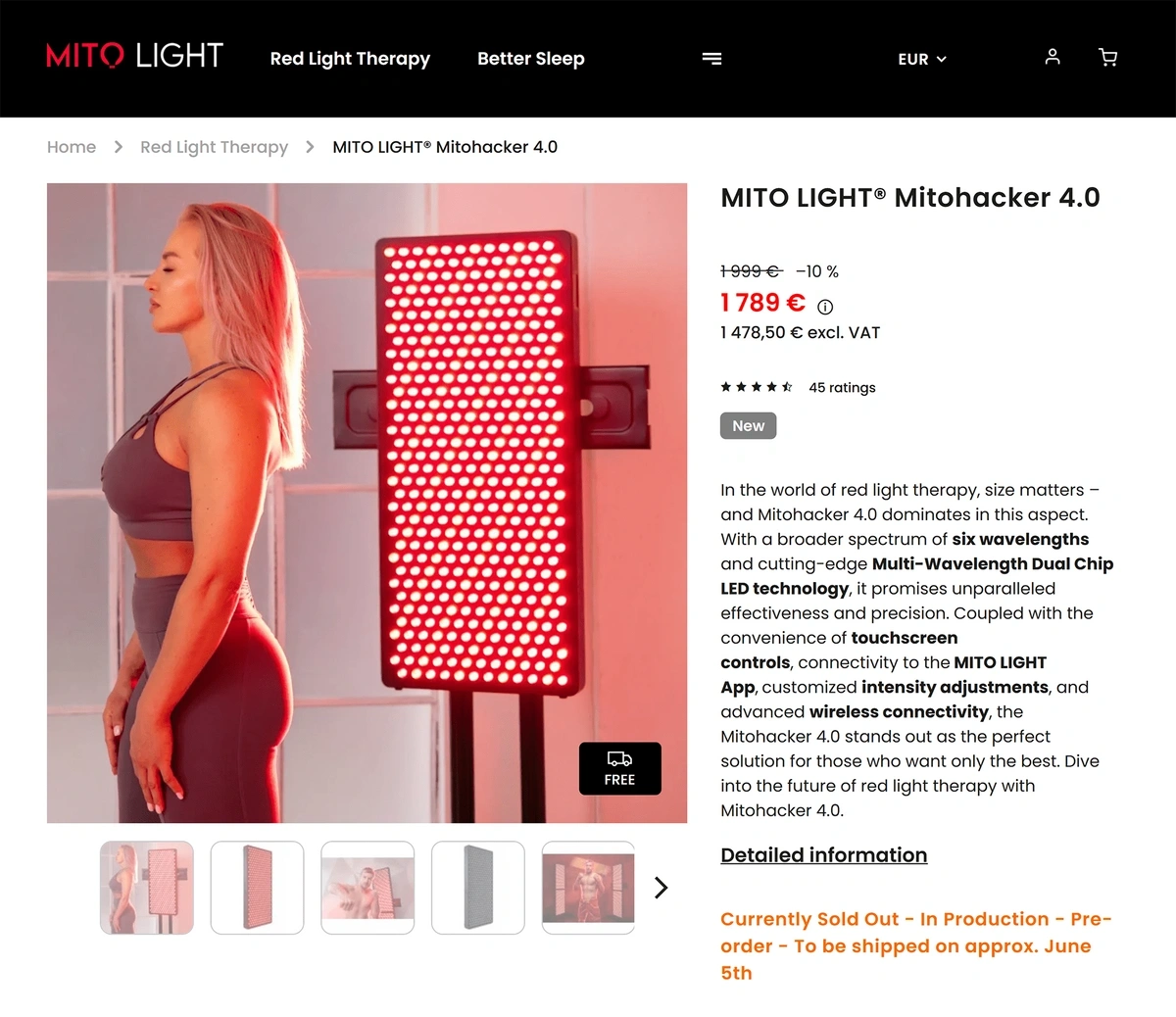
For example, red light therapy. This is the type of treatment that would traditionally be offered at a spa. But consumers are now using at-home red light therapy devices to bring this skin care routine into their homes.
Digital consumers are looking for at-home versions of healthcare treatments. In this case, red light therapy devices. That brings us to our next consumer behavior trend.
5. Influencers increasingly impact purchasing decisions
Consumers known as Millennials and the so-called generation Z continue to trust influencers to discover products. And to choose which brands to trust.
According to Influencer Marketing Hub, the influencer marketing space will grow to $24 billion by the end of 2024.
Therefore, influencer marketing continues to be a growing channel or method. And one that many marketing professionals rely on.
However, the way consumers interact with and buy from influencers is changing. Specifically, digital consumers now seek recommendations from influencers in social media that have only a small and niche audience.
An industry study by HypeAuditor found that social accounts with 1,000 to 5,000 followers get twice the relative engagement on each post than influencers with larger numbers of followers.
That's why more and more brands are looking for "micro-influencers." A recent report found that 40% of brands using influencer marketing have decided to partner with a micro-influencer instead of a traditional one.
6. Consumers subscribe to more monthly services
The monthly subscription industry has grown rapidly, with a 90% increase in the number of subscribers year over year.
This growth is largely due to the fact that digital consumers are more open than ever to subscribing to monthly products and services.
And, from Amazon Prime to video streaming services, there is now a wide range of monthly subscription products to choose from.
For example, historically, video games have been one-time purchases. You see a game you want, buy it for a single price, and play it for an unlimited time.
To a large extent, this remains the case. But we're also seeing Sony, Microsoft and other gaming industry giants launch subscription gaming services. Which are essentially the Netflix of video games.
For example, the Xbox Game Pass service streams hundreds of titles for a monthly subscription fee. Other examples of this consumer trend include monthly boxes, streaming services, and meditation apps.
7. Consumers spend more on their pets
The US pet furniture market is worth more than $2 billion. And pet owners are now more willing than ever to shell out large amounts of money to improve their pets' quality of life.
American consumer spending on pets is growing steadily. And an increasing part of the industry is based on luxury products.
For example, CBD for dogs, organic food for cats and devices so owners can make video calls to their pets. It doesn't matter the product: if it will make your pets happier, chances are there will be a group of owners who will buy it.
Some more examples:
- If Fido eats too much ice cream (or too many Starbucks Puppuccinos), you can buy him a dog treadmill.
- Or help him regain balance with some raw dog food or dog supplements.
Searches for “dog supplements” have increased every year.
- If Fido doesn't recover after that, it may be time to get pet insurance.
But why do people spend so much money on their pets now?
Like many consumer behavior trends over the past year, the answer is: probably the pandemic.
Owners are more willing to purchase luxury pet products because they have seen their pets more frequently recently.
However, the trend has been growing for longer. As a long-term movement, luxury pet products are most likely related to the fact that fewer people are having children (and opting for "fur babies").
This is a broader trend that is expected to continue around the world.
8. The Mindfulness market continues to grow
The global meditation market is expected to grow from $4.08 billion in 2019 to $9 billion in 2027 (at a compound annual growth rate of 10.4%).
Calm is an app that offers short, themed meditations to increase focus or address difficult emotions. And in addition to his usual meditations, Calm features the voices of celebrities like LeBron James and Matthew McConaughey.
Calm has a free basic plan, as well as a premium membership for $69.99 per year. To date, the company has raised $218 million in venture capital funding.
One of Calm's biggest competitors is Headspace, founded in London in 2010 but now based in California. Headspace offers new users a 10-day introductory course on guided meditation. It also includes “mindfulness exercises” and physical stretching exercises.
Headspace's pricing is similar to Calm, with an annual subscription of $69.99 and a monthly option of $12.99. The company has raised $215.9 million to date, including $100.7 million in equity and $40 million in debt in 2020.
Waking Up is another example. The guided meditation app features Sam Harris, author of the NYT best-selling book of the same name. Its price is higher than Calm and Headspace, $99.99 per year.
The Ten Percent Happier meditation app is also based on a best-selling book. It offers a free version and a $99/year membership. Ten Percent Happier has raised $8.1 million to date.
Inner Explorer has designed a mindfulness system and app for teachers. The nonprofit organization's daily exercises are currently used in more than 5,000 schools and reach more than 1.7 million students. This, they claim, has led to 28% higher student grades and a 43% decrease in teacher-reported stress.
Other popular meditation apps include Insight Timer (for which searches are up 85% in five years) and Breethe (for which searches are up 30%).
Biofeedback startups are taking a different approach in the mindfulness space. Biofeedback involves monitoring your body's reactions (such as heart rate, breathing, and brain activity) so you can try to control your stress, emotions, motivation, or ability to concentrate.
Research shows that biofeedback can even help treat conditions such as migraines and high blood pressure.
An interesting biofeedback startup is Muse. Muse manufactures EEG headbands designed to help users meditate and sleep better. Combined with its companion app, the device plays the sound of calm weather while you focus on your breathing. When your mind wanders, noises become stormy to remind you to relax. The startup has raised $39.9 million since its founding in 2007.
It is without a doubt an infinite industry and trend.
9. The home becomes the Hub
The average American adult spends 90% of their time indoors. And with more people working from home than ever, this number may be increasing.
And all this time spent living and working at home is already starting to change consumer behavior in unexpected ways. For example, the rise of the smart doorbell.
As people spend more time at home, they realize that their home security may not be up to par, that they want to see the entire exterior of their home in real time, and that their online shopping deliveries are at risk at the entrance.
That is why there is a greater demand for smart doorbell type products, such as Amazon's Ring.
Another example of this trend is the increasing number of searches related to cooking. For example, searches for the product “air fryer” have increased over the past five years.
Conclusion
What do you think of our list of recent trends in digital consumer behavior? There may be many more, but these give us a clear idea of how people are buying online.
One of the elements that unites many of these trends is the focus on comfort. Digital consumers are increasingly willing to invest in products and services that save them time and effort, even if they have to pay more to do so.
Another characteristic that many of these trends have in common is a renewed focus on customer experience. As consumers increasingly turn to digital channels to browse and shop, brands must ensure their digital experience is on par with what someone would get in a store.
Finally, many of these trends show a renewed consumer focus on the home. From home security to games and home spa treatments, consumers are willing to pay for products that make their home more functional.
Do you need to develop or migrate your ecommerce?
Contact us today here to start an incredible project together.

Digital Marketing Manager at Orienteed.
I lead the planning and execution of Orienteed's digital marketing strategy with a fantastic team, making sure it aligns with our strategic goals and drives business growth. I'm really into inbound marketing, web design, and creating content that matters.
I wrote the book: "How to Create a Profitable Blog Today."
"Marketing is about values. It’s a complicated and noisy world, and we’re not going to get a chance to get people to remember much about us. No company is. So we have to be really clear about what we want them to know about us."
—Steve Jobs